

Written by Craig B

Tree Root Rot After Monsoon Rain in Phoenix
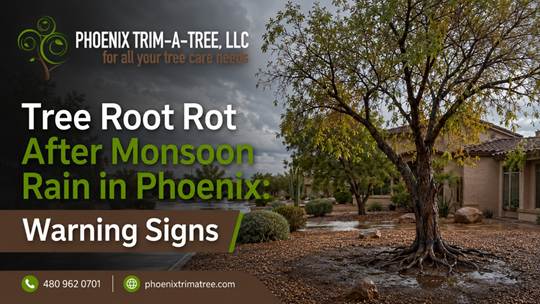
A strong monsoon storm can leave a Phoenix yard looking refreshed, but water that remains around a tree for too long can create a different problem below the surface. Roots need oxygen as well as moisture. When heavy soil stays saturated, weakened roots may begin to decline and soil borne organisms can take advantage. Root rot is not the only reason a tree wilts or drops leaves in August. Heat stress, irrigation failure, trunk injury and other diseases can look similar. The warning signs below can help homeowners decide when a professional inspection is needed. Watch for Changes That Continue After the Storm Temporary leaf drop after wind and extreme heat does not always mean a tree is dying. Concern increases when the canopy continues thinning several days after the soil should have started drying. Look for yellowing leaves, wilted growth, dead branch tips or one section of the canopy declining faster than the rest. A tree may also produce fewer new leaves or appear dull even though the surrounding soil is wet. Do not assume more water is the answer. Adding irrigation to already saturated soil can make root conditions worse. Check the Soil Around the Root Zone Push a long screwdriver or soil probe into the ground several feet from the trunk. Soil that remains wet and soft long after nearby areas have dried may indicate poor drainage or excessive irrigation. Check whether roof runoff, a downspout, a low spot or a broken irrigation line is sending extra water toward the tree. Gravel can hide standing moisture, so inspect beneath the surface rather than judging by appearance alone. Water should be applied across the active root area, not concentrated against the trunk. Repeated watering at the base can keep the crown wet and encourage decay. Inspect the Trunk at Ground Level The root flare is the area where the trunk widens and meets the soil. It should remain visible rather than buried beneath soil, rock or deep mulch. Look for darkened bark, soft tissue, cracking or fluid near the lower trunk. Mushrooms or other fungal growth around the base do not prove that the living roots are rotten, but they are a reason to arrange an assessment. Do not scrape bark, dig through major roots or apply a home fungicide without a diagnosis. Damage from digging can create another entry point for decay. Review the Irrigation Schedule Automatic irrigation often continues on its normal summer program after a monsoon storm. That can give a mature tree rainwater followed by another full irrigation cycle before the soil has drained. Pause or adjust irrigation according to actual soil moisture, tree species and soil type. Phoenix clay soils may remain wet below the surface after the top layer looks dry. Desert adapted trees usually need a different schedule from citrus, ficus or other high water use species. Deep watering is generally better than frequent shallow watering, but the soil should be allowed to regain air between applications. Understand Why Diagnosis Matters Root and crown diseases can cause gradual decline, sudden wilting or branch dieback. The University of Arizona notes that apple, pistachio, peach and citrus trees can be vulnerable to Phytophthora problems when grown in heavy or excessively wet soil.  Those symptoms can overlap with cotton root rot, vascular wilt, heat injury and damaged irrigation. A professional may need to inspect the root flare, soil, canopy and irrigation system before recommending treatment. Some trees can recover when drainage and watering problems are corrected early. A tree with extensive root loss, a decayed trunk base or serious instability may need removal for safety. Arrange a Tree Health Inspection With Phoenix Trim A Tree Phoenix Trim A Tree provides tree health care, pruning, removal, deep root feeding, stump grinding and storm damage service throughout Phoenix, Mesa, Chandler, Scottsdale, Glendale, Gilbert and Tempe. The company is fully insured and led by an ISA Certified Arborist with agricultural training. If a tree remains wilted, yellow or unstable after monsoon rain, call 480 962 0701 for a free estimate and professional assessment.  References Phoenix Trim A Tree: Tree Care Services Phoenix Trim A Tree: About the Company Phoenix Trim A Tree: Residential Tree Services University of Arizona Cooperative Extension: Phytophthora Rots University of Arizona Cooperative Extension: Arizona Landscape Palms and Their Management

A strong monsoon storm can leave a Phoenix yard looking refreshed, but water that remains around a tree for too long can create a different problem below the surface. Roots need oxygen as well as moisture. When heavy soil stays saturated, weakened roots may begin to decline and soil borne organisms can take advantage.

Root rot is not the only reason a tree wilts or drops leaves in August. Heat stress, irrigation failure, trunk injury and other diseases can look similar. The warning signs below can help homeowners decide when a professional inspection is needed.

Watch for Changes That Continue After the Storm

Temporary leaf drop after wind and extreme heat does not always mean a tree is dying. Concern increases when the canopy continues thinning several days after the soil should have started drying.

Look for yellowing leaves, wilted growth, dead branch tips or one section of the canopy declining faster than the rest. A tree may also produce fewer new leaves or appear dull even though the surrounding soil is wet.

Do not assume more water is the answer. Adding irrigation to already saturated soil can make root conditions worse.

Check the Soil Around the Root Zone

Push a long screwdriver or soil probe into the ground several feet from the trunk. Soil that remains wet and soft long after nearby areas have dried may indicate poor drainage or excessive irrigation.

Check whether roof runoff, a downspout, a low spot or a broken irrigation line is sending extra water toward the tree. Gravel can hide standing moisture, so inspect beneath the surface rather than judging by appearance alone.

Water should be applied across the active root area, not concentrated against the trunk. Repeated watering at the base can keep the crown wet and encourage decay.

Inspect the Trunk at Ground Level

The root flare is the area where the trunk widens and meets the soil. It should remain visible rather than buried beneath soil, rock or deep mulch.

Look for darkened bark, soft tissue, cracking or fluid near the lower trunk. Mushrooms or other fungal growth around the base do not prove that the living roots are rotten, but they are a reason to arrange an assessment.

Do not scrape bark, dig through major roots or apply a home fungicide without a diagnosis. Damage from digging can create another entry point for decay.

Review the Irrigation Schedule

Automatic irrigation often continues on its normal summer program after a monsoon storm. That can give a mature tree rainwater followed by another full irrigation cycle before the soil has drained.

Pause or adjust irrigation according to actual soil moisture, tree species and soil type. Phoenix clay soils may remain wet below the surface after the top layer looks dry. Desert adapted trees usually need a different schedule from citrus, ficus or other high water use species.

Deep watering is generally better than frequent shallow watering, but the soil should be allowed to regain air between applications.

Understand Why Diagnosis Matters

Root and crown diseases can cause gradual decline, sudden wilting or branch dieback. The University of Arizona notes that apple, pistachio, peach and citrus trees can be vulnerable to Phytophthora problems when grown in heavy or excessively wet soil.

Those symptoms can overlap with cotton root rot, vascular wilt, heat injury and damaged irrigation. A professional may need to inspect the root flare, soil, canopy and irrigation system before recommending treatment.

Some trees can recover when drainage and watering problems are corrected early. A tree with extensive root loss, a decayed trunk base or serious instability may need removal for safety.

Arrange a Tree Health Inspection With Phoenix Trim A Tree

Phoenix Trim A Tree provides tree health care, pruning, removal, deep root feeding, stump grinding and storm damage service throughout Phoenix, Mesa, Chandler, Scottsdale, Glendale, Gilbert and Tempe. The company is fully insured and led by an ISA Certified Arborist with agricultural training. If a tree remains wilted, yellow or unstable after monsoon rain, call 480 962 0701 for a free estimate and professional assessment.

References

Phoenix Trim A Tree: Tree Care Services

Phoenix Trim A Tree: About the Company

Phoenix Trim A Tree: Residential Tree Services

University of Arizona Cooperative Extension: Phytophthora Rots

University of Arizona Cooperative Extension: Arizona Landscape Palms and Their Management